The Government of Pakistan has launched a major Ramadan relief initiative for 2026 under the leadership of Shehbaz Sharif. This year, instead of distributing ration bags or offering utility store subsidies, the government is providing Rs. 13,000 in direct cash assistance to eligible families.
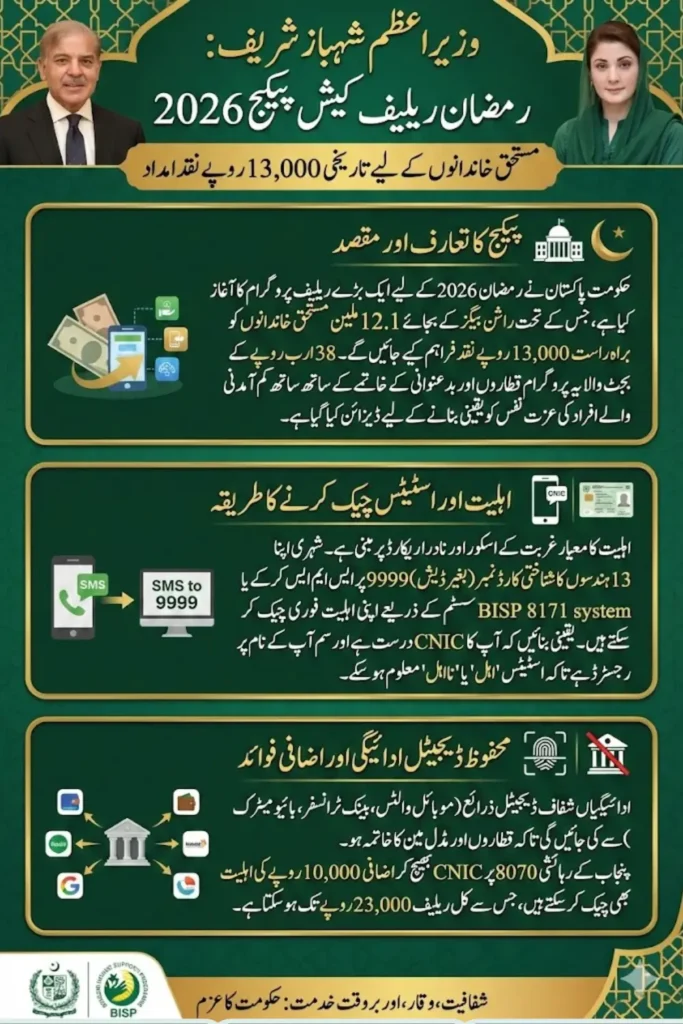
The purpose of this program is simple: to help low-income households manage essential food expenses during Ramadan without facing long queues, shortages, or unfair distribution. Around 12.1 million deserving families across Pakistan are expected to benefit from this historic relief package.
Overview of Ramadan Relief Package 2026
The Ramadan Package 2026 is one of the largest direct cash transfer programs introduced to support financially vulnerable families. Instead of physical distribution, funds will be transferred digitally to ensure transparency and dignity.
The government has allocated a significant budget to make sure assistance reaches the right households without delay or corruption.
You can also read: KPK Ramzan Package Registration 2026
Program Details at a Glance
| Feature | Information |
|---|---|
| Total Budget | Rs. 38 Billion |
| Cash Amount | Rs. 13,000 per family |
| Beneficiaries | 12.1 million households |
| Payment Type | Direct digital transfer |
| Verification | Biometric confirmation (if required) |
This shift to digital payments reflects the government’s focus on reducing middle agents and ensuring secure transfers.
Who Is Eligible for the Rs. 13,000 Ramadan Cash?
The eligibility criteria are based on financial status and national database records. The government uses poverty data and verification systems to identify deserving families.
You may qualify if:
- You are a Pakistani citizen with a valid CNIC
- Your household income falls within the low-income bracket
- Your PMT poverty score is within the approved limit
- You are registered in BISP or a related government database
- Your NADRA records are complete and updated
Families already registered under the Benazir Income Support Programme are given priority consideration.
Who Is Usually Not Eligible?
Certain applicants may be rejected based on financial or official records:
- Government employees in higher salary grades
- Active income tax filers
- Individuals with high electricity consumption records
- Households owning significant assets
- Incomplete or incorrect NADRA data
If you are marked as not eligible, you can still update your information and recheck your status later.
How to Check 13000 Ramadan Package Status
The government has introduced simple verification methods so citizens can check eligibility from home.
1. SMS Method (Send CNIC to 9999)
This is the easiest and fastest way to verify your status.
Follow these steps:
- Open your mobile SMS application
- Type your 13-digit CNIC number (without dashes)
- Send it to 9999
- Wait for the reply message
You will receive one of the following responses:
- Eligible
- Not Eligible
- Under Verification
Always send the SMS from a SIM registered in your own name to avoid rejection.
2. BISP 8171 Verification System
Families registered in the Benazir Income Support Programme can check eligibility through the 8171 system.
You can:
- Verify your poverty score
- Confirm registration status
- Check qualification chances
If your NSER survey is incomplete, you may need to update it to improve eligibility.
You can also read: Shahbaz Sharif 13000 Ramzan Package
Payment Method – How You Will Receive the Money
Unlike previous Ramadan packages, this time the government will not distribute ration bags or set up temporary camps. Instead, funds will be transferred directly through secure digital channels.
Payment options include:
- Digital wallets
- Direct bank transfer
- Biometric withdrawal centers
- Branchless banking agents
This new system:
- Reduces corruption
- Eliminates long waiting lines
- Prevents black marketing
- Ensures fair and transparent distribution
Beneficiaries may need biometric verification before withdrawing funds.
Punjab Residents – Extra Rs. 10,000 Relief
Residents of Punjab may receive additional support under a provincial relief program introduced by Maryam Nawaz.
Eligible families can:
- Send their CNIC to 8070
- Verify eligibility for the Punjab package
- Receive an additional Rs. 10,000
This means some households in Punjab could receive up to Rs. 23,000 total relief during Ramadan. Make sure your CNIC and family details are updated before applying for both programs.
What to Do If Your Status Shows Not Eligible
If you receive a “Not Eligible” response, do not panic. Many applications are rejected due to outdated or incomplete records.
You should:
- Visit NADRA and update family information
- Complete the NSER survey if pending
- Correct any income or household record errors
- Recheck eligibility after database updates
Keeping your records accurate significantly increases your chances of qualifying.
Why the Government Switched to Direct Cash Support
In previous years, subsidy systems faced several complaints from the public. Many families struggled due to limited stock and unfair practices.
Common issues included:
- Long queues at utility stores
- Political influence in distribution
- Short supply of essential items
- Black marketing and resale
Direct cash transfer allows families to purchase food items according to their own needs. It also protects dignity and removes unnecessary dependence on distribution camps.
You can also read: Gas Supply Timings Announced for Ramadan
Conclusion
The Shehbaz Sharif Ramadan Package 13000 is a major financial relief initiative aimed at supporting low-income families during Ramadan 2026. With a Rs. 38 billion budget and coverage of 12.1 million households, it stands among Pakistan’s largest direct cash support programs.
Eligibility can be checked easily through SMS 9999 or the BISP 8171 system. Payments will be made digitally, ensuring transparency and convenience. Make sure your CNIC details are accurate, your SIM is registered in your name, and your poverty data is updated to avoid rejection.